
A Strategic Guide to Sourcing High-Performance Industrial Compressor Parts


In the high-stakes environment of modern manufacturing, the hum of machinery is the sound of productivity. But for facility managers and maintenance engineers, that sound is fragile. A single failed component—whether it’s a worn reed valve in a reciprocating compressor or a clogged oil separator element—can silence an entire production line. The resulting unplanned downtime doesn’t just halt output; it erodes profit margins, delays client deliverables, and strains operational budgets.
For decades, the default response to equipment failure was simple: call the Original Equipment Manufacturer (OEM). However, the industrial landscape of 2026 has shifted. Supply chain volatility, extended lead times, and the rising cost of proprietary parts have forced a reevaluation of maintenance strategies. Today, smart procurement isn’t about blind loyalty to a brand logo; it’s about understanding engineering specifications, material science, and the viability of high-quality alternative components. This guide explores how industrial facilities can maintain peak performance by looking beyond the brand name, focusing on technical compatibility and supply chain resilience.
The Myth of the "Proprietary" Component
One of the most persistent misconceptions in industrial maintenance is the idea that every part inside a machine is a unique invention of the manufacturer. In reality, major compressor brands are often systems integrators. They assemble complex machines using a mix of proprietary designs and standard industrial components.
Take, for example, the drive system. A compressor might feature a branded housing, but the V-belts transmitting power from the motor to the airend are frequently standard industrial profiles. A belt marked with an OEM part number like 586001019 often corresponds directly to a universal industrial standard, such as an SPB 2360 profile. When a facility manager insists on ordering the "branded" belt, they are often paying a premium for the packaging and the logistics of the OEM’s distribution network, not for a superior rubber compound. By identifying the underlying industrial standard, plants can source these consumables from specialized industrial transmission suppliers who offer top-tier brands like Gates or Optibelt. These alternatives often provide equal or superior durability because their core business is friction and power transmission, not just assembling compressors.
The same logic applies to sealing solutions. Components like gaskets made from NOVAPHIT AFM 20 material are specified for their chemical resistance and thermal stability. This is a standardized material specification used across the chemical and energy sectors. When a maintenance team recognizes that the "proprietary" gasket is actually a cut-to-size piece of a widely available industrial material, they unlock a broader supply base. This knowledge transforms a potential bottleneck into a routine procurement task, ensuring that a ten-dollar seal doesn’t become the reason a million-dollar machine sits idle.
Filtration: Where Performance Meets Specification
While belts and gaskets are largely about dimensional and material standards, filtration is where the debate between OEM and alternative parts becomes most technical. Air filters, oil filters, and separator elements are the lungs and kidneys of a compressed air system. In environments with high humidity or particulate matter, the quality of these components dictates the lifespan of the screw element and the purity of the air supply.
The hesitation to switch to alternative filters usually stems from a fear of compromised efficiency. However, the filtration industry has matured significantly. Specialized manufacturers now produce replacement elements that are engineered to match or exceed the original performance metrics. The key lies in the specifications: micron rating, initial pressure drop, dust holding capacity, and media integrity.
A high-quality alternative air filter isn’t just a generic foam ring; it is a precision-engineered component designed to meet the specific airflow requirements of models like the BOGE SR series. For instance, an element with the part number 57566662013P requires a specific balance between surface area and structural rigidity. Reputable third-party manufacturers use multi-layered media technologies that capture sub-micron particles while maintaining low differential pressure. This ensures that the compressor doesn’t have to work harder to pull air through the filter, which directly impacts energy consumption.
Furthermore, separator elements are critical for oil carry-over prevention. A failing separator doesn’t just waste expensive compressor oil; it contaminates the downstream air network, risking product quality in food, pharmaceutical, or electronics manufacturing. Modern alternative separators utilize advanced coalescing media that achieve oil carry-over rates of less than 3 ppm, strictly adhering to ISO 8573-1 standards. By demanding test certificates and performance data from suppliers rather than relying solely on the brand name on the box, procurement teams can validate that the alternative part meets the rigorous demands of their specific application.
The Electronic Brain: Navigating Controller Replacements
Not all components are created equal, and a nuanced sourcing strategy requires knowing when not to compromise. While mechanical wear parts like filters and valves have straightforward physical specifications, electronic controllers represent a different challenge.
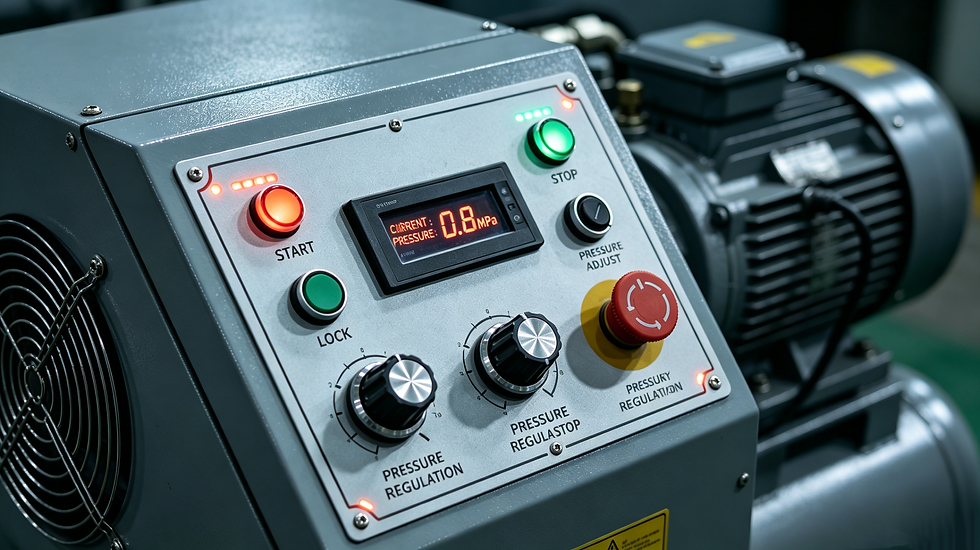
Units like the BDC-T134 controller are the brain of the compressor. They manage load/unload cycles, monitor temperature and pressure sensors, and handle safety interlocks. Unlike a V-belt, a controller cannot be substituted with a generic industrial equivalent. The firmware is deeply integrated with the machine’s specific geometry and operational parameters.
In this domain, the "alternative" strategy shifts from replacement to repair and lifecycle management. Instead of searching for a counterfeit or incompatible knock-off, forward-thinking facilities partner with specialized industrial electronics repair services. These experts can diagnose board-level failures, replace faulty capacitors or relays, and restore functionality at a fraction of the cost of a new unit. This approach extends the life of legacy equipment and avoids the need for costly control system retrofits. It also highlights the importance of keeping a spare controller on hand for critical assets, sourced through verified channels that guarantee the firmware version matches the existing installation.
Building a Resilient Supply Chain for Industrial Assets
The transition to a mixed sourcing strategy—using OEM parts for complex assemblies and electronics, while leveraging high-quality alternatives for consumables—offers more than just cost savings. It builds supply chain resilience.
Relying exclusively on a single OEM creates a single point of failure. If the manufacturer faces production delays, shipping disruptions, or discontinues a legacy model, the buyer is left vulnerable. By qualifying alternative suppliers for filters, seals, and drive components, facilities create a redundant supply network. This diversification ensures that maintenance schedules are dictated by condition monitoring and preventive plans, not by the delivery timelines of a distant warehouse.
Moreover, this approach encourages a deeper understanding of the machinery. When maintenance teams engage with technical datasheets to cross-reference part numbers and verify material specifications, they move from being passive consumers of parts to active managers of asset reliability. They begin to recognize that a "replacement part" is defined by its engineering integrity, not just its logo.
Conclusion: Precision Over Prestige
In the quest for operational excellence, the goal is not to minimize the cost of parts, but to maximize the value of uptime. The industrial sector in 2026 demands a sophisticated approach to maintenance that balances risk, cost, and performance.
By distinguishing between proprietary technology and standard industrial components, facilities can stop overpaying for branding on simple items like belts and gaskets. By validating the technical specifications of alternative filters, they can ensure air purity and energy efficiency without the OEM premium. And by protecting critical electronic assets through professional repair rather than risky substitutions, they safeguard the intelligence of their machinery.
Ultimately, the most reliable partner for your industrial equipment isn’t always the name on the side of the machine. It’s the combination of precise engineering knowledge, rigorous quality standards, and a supply chain that prioritizes your production continuity above all else. Whether you are managing a single workshop or a sprawling manufacturing plant, the power to keep your operations running smoothly lies in the details of what you choose to put inside your machines.


Comments